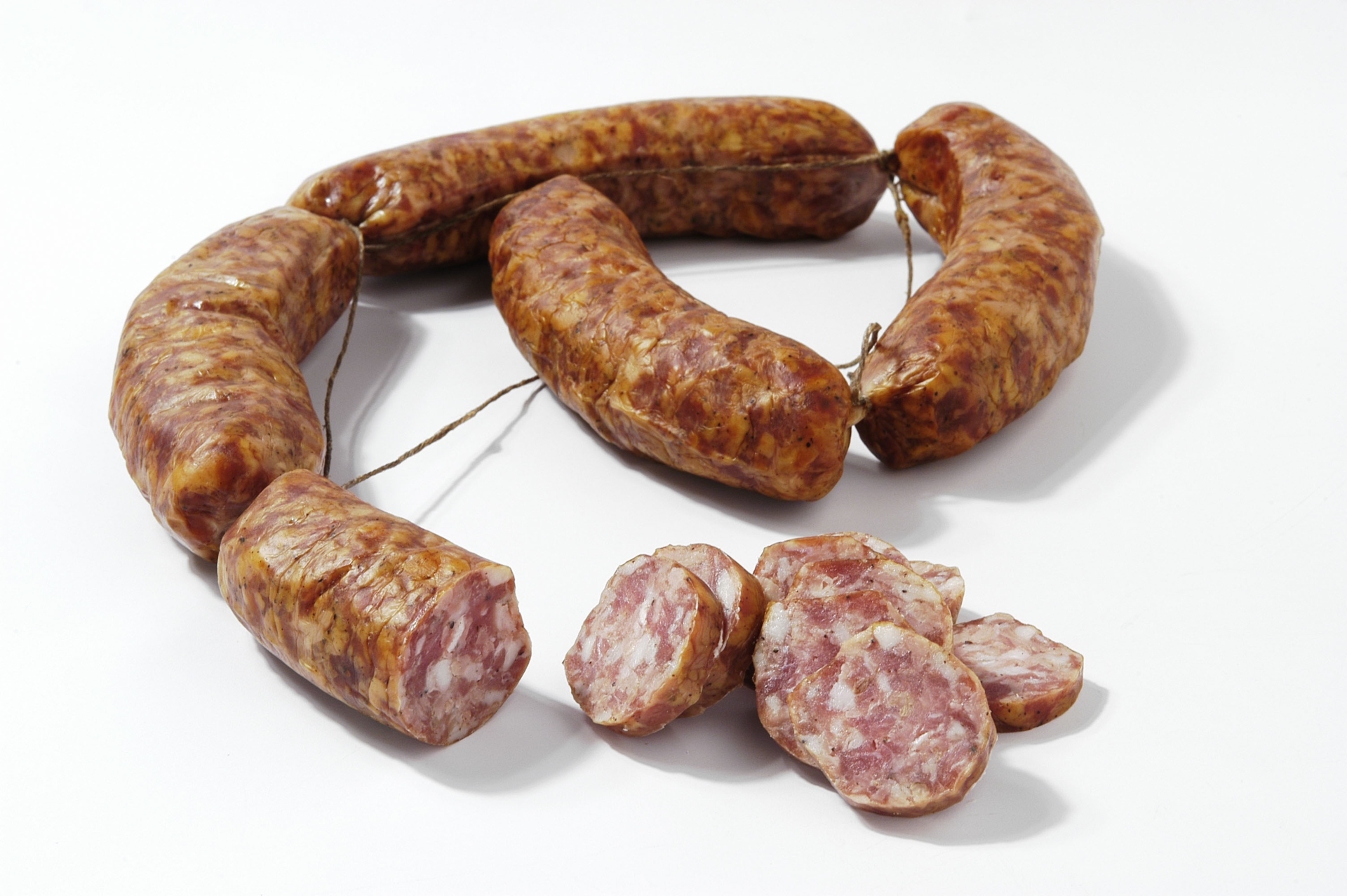
The Ciuìga del Banale preserves a fascinating story.
Its roots go back to the second half of the nineteenth century, a time of great poverty in San Lorenzo Dorsino. Back then, farmers lived off what the land could offer: small plots for large families, with many mouths to feed. Salvation was the stable, with cows and, above all, the pig, a true treasure of nourishment. Nothing of the pig was wasted: every part had value and a precise destiny. Half of the meat was exchanged with the cooperative to obtain precious goods such as sugar, yeast and preserves; the other half was kept as if it were gold.
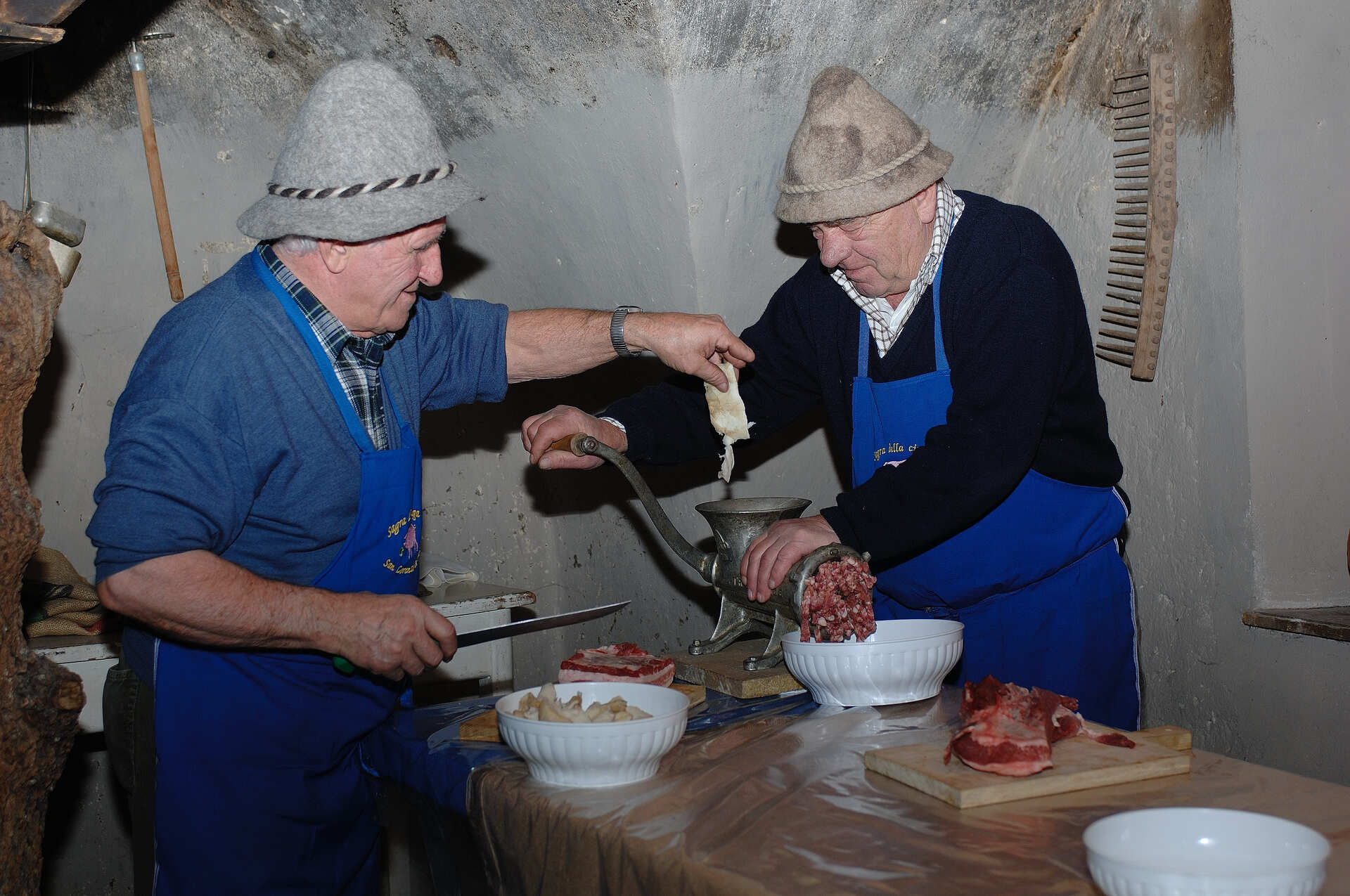
It was in this context that the Ciuìga was born, a symbol of a farming culture shaped by the ingenuity and survival spirit of the peasants. To make the salami more abundant, white turnips were added to the pork trimmings, the bread of the poor: easy to grow and able to give substance to food without covering its flavour. Sown in July after the wheat and harvested in October, the turnips were washed, sliced, boiled and squeezed in jute sacks, to obtain the right consistency.
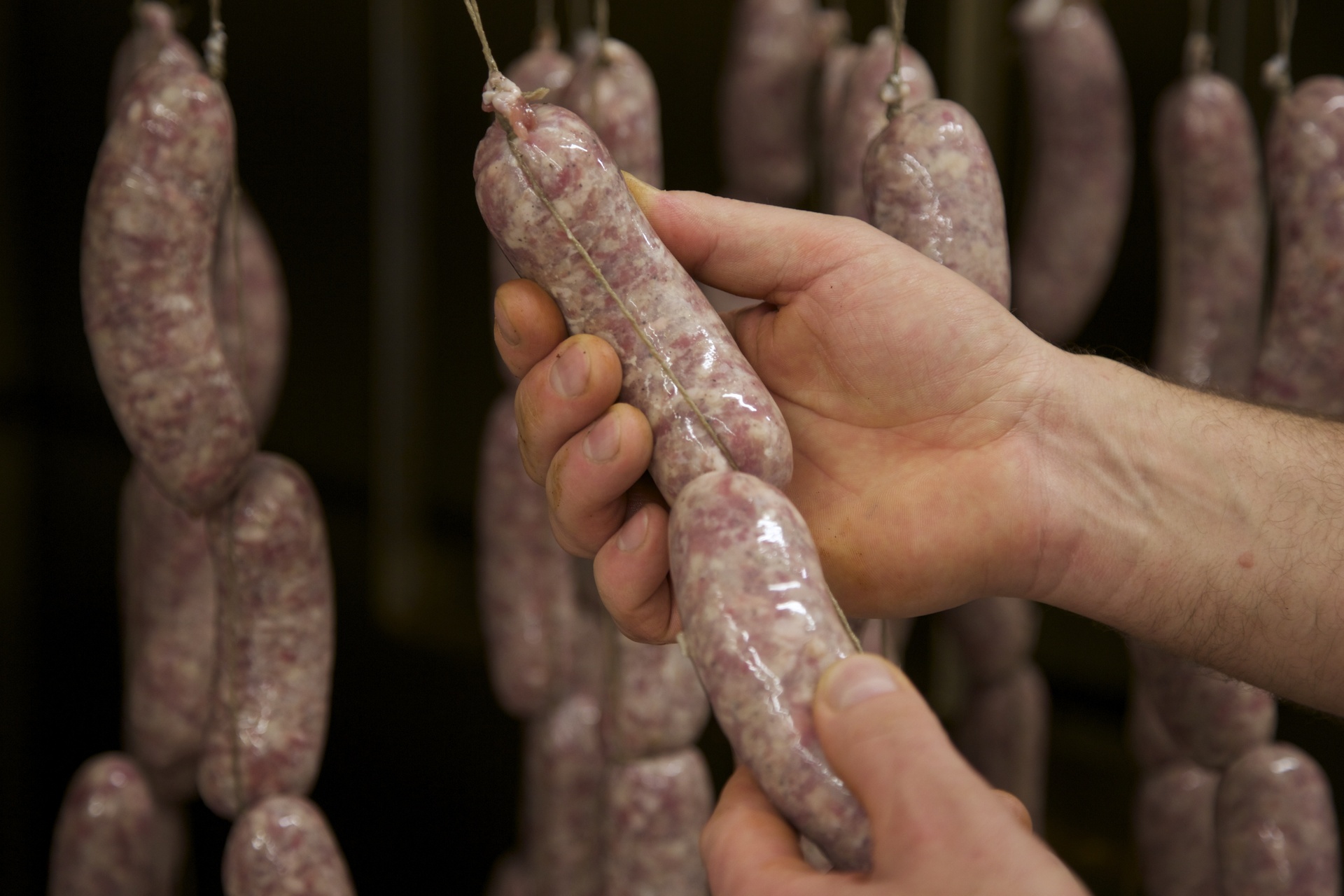
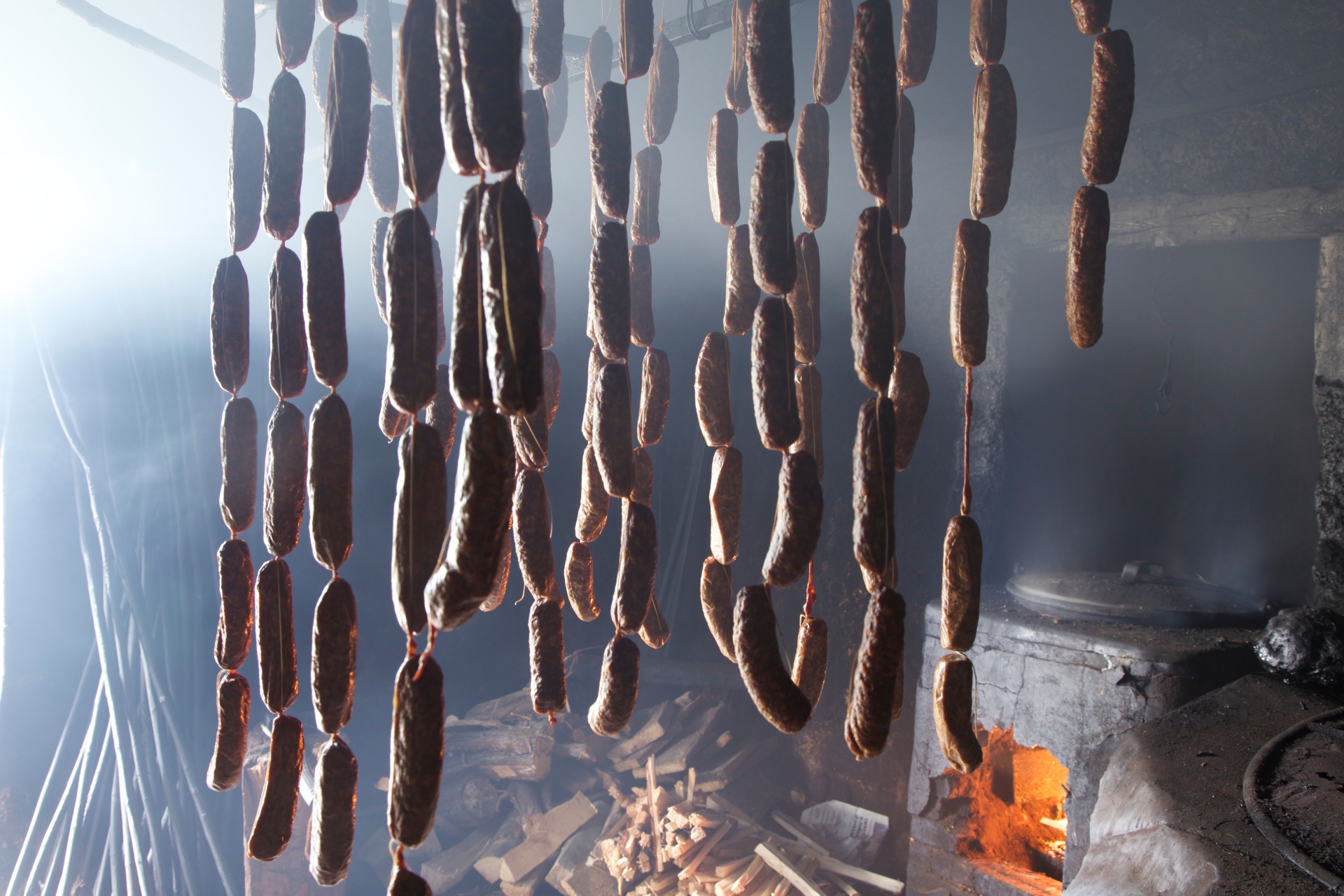
To bring out its flavour, garlic, black pepper and salt were added; and to give colour to a mixture that was too pale, blood was added. The final touch was smoking, slow and scented with juniper, in the chimneyless rooms of the old turnus dairy in Senaso, where skilled hands like those of Guerino, Gigioti and Angel knew how to measure the smoke with mastery.

At the beginning, the recipe called for 70% turnips and only 30% meat. Today the Ciuìga, which has become a Slow Food Presidio, has been elevated: 70% selected meat and 30% turnips, still cooked and squeezed using modern presses. Many families continue to make it at home, while production intended for sale is handled exclusively by the Famiglia Cooperativa Brenta Paganella, which preserves the tradition with small modern adjustments: less pepper, less smoke, but always the goodness of local turnips and pigs raised in Trentino.
The secret of the Ciuìga? Simplicity, ingenuity and tradition. Every bite tells the story of a land, and of those who knew how to turn hardship and poverty into creativity and pride. An ancient flavour that is still alive, and that even today speaks of community, memory and roots.