Val d’Ambiez is our place of the heart.
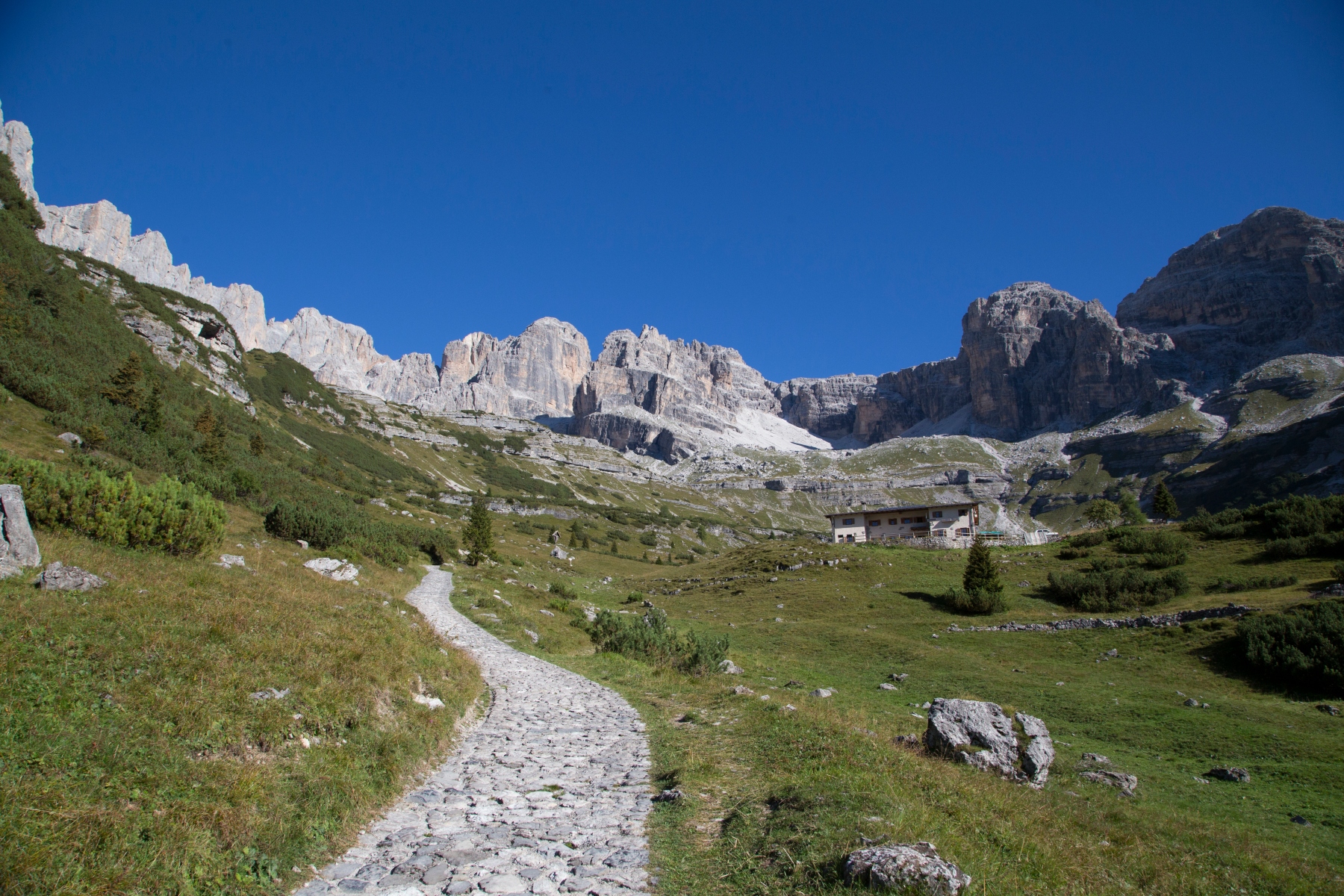
A gateway to the southern part of the Brenta Dolomites, it stretches for about twelve kilometers and climbs more than sixteen hundred meters in elevation gain, from the hamlet of San Lorenzo in Banale up to Busa di Prato, where Rifugio Agostini stands: a red roof, blue windows, nestled among the rocks.
It is the valley that wrote important pages in the history of mountaineering, with a capital M, made of determination, passion, and sacrifice. And yet Val d’Ambiez, even today, remains on the margins of mass tourism, far from the sirens of exploitation and haste. It is not crossed by lifts or paved roads. To experience it you need slow, steady steps. A taxi-jeep service runs only as far as Rifugio Cacciatore.
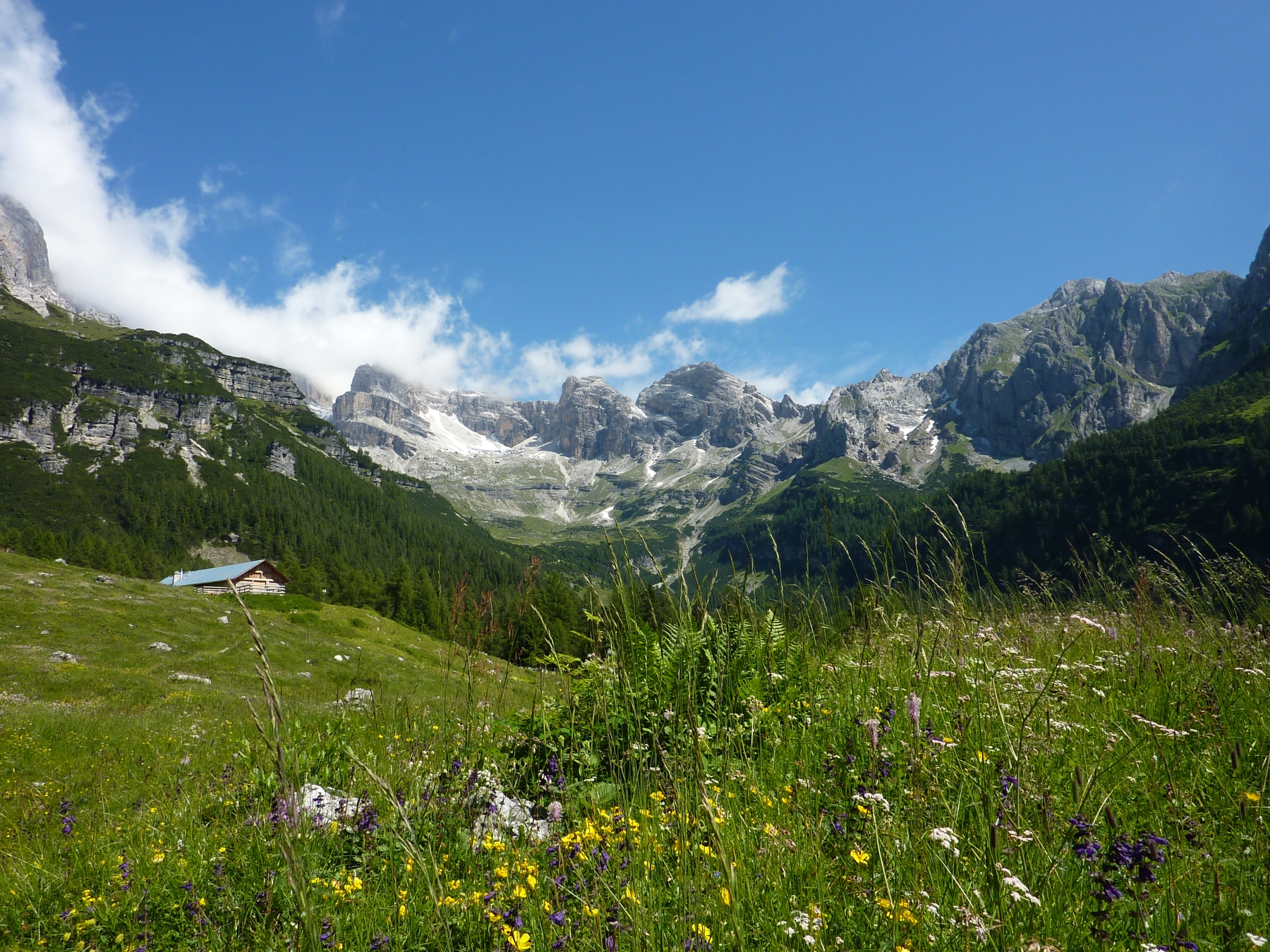
The entire valley is carved by the Rio Ambiez. Its waters, which once powered a large mill in the hamlet of Andogno, today offer a natural stage to experience the thrill of canyoning, accompanied by local alpine guides. The valley begins narrow, wedged between rock walls, then suddenly opens up, revealing pastures, alpine dairies, and Dolomite spires now recognized as a UNESCO World Heritage Site.
The panorama leaves you speechless: a crown of peaks encloses the valley’s amphitheater, almost as if protecting its pure, wild beauty. A hymn to the most authentic nature, kingdom of deer, roe deer, chamois, marmots, brown bears, and even a herd of hornless yaks that graze freely among the meadows in summer.
The landscape is dominated by towers and walls of absolute verticality: Cima d’Ambiez (3096 m), famous for its perfect rock and defined as the most elegant by the mountaineer Ettore Castiglioni, and Cima Tosa (3159 m), the highest in the group. Walking along Val d’Ambiez is like crossing the seabed of an ancient tropical sea. Near Rifugio Cacciatore, at the Garden of Fossils, you can admire the remains of megalodonts, witnesses to a remote time when these mountains were submerged under water.

It is easy to understand why Val d’Ambiez has always been, for us in San Lorenzo Dorsino, the place of the heart.