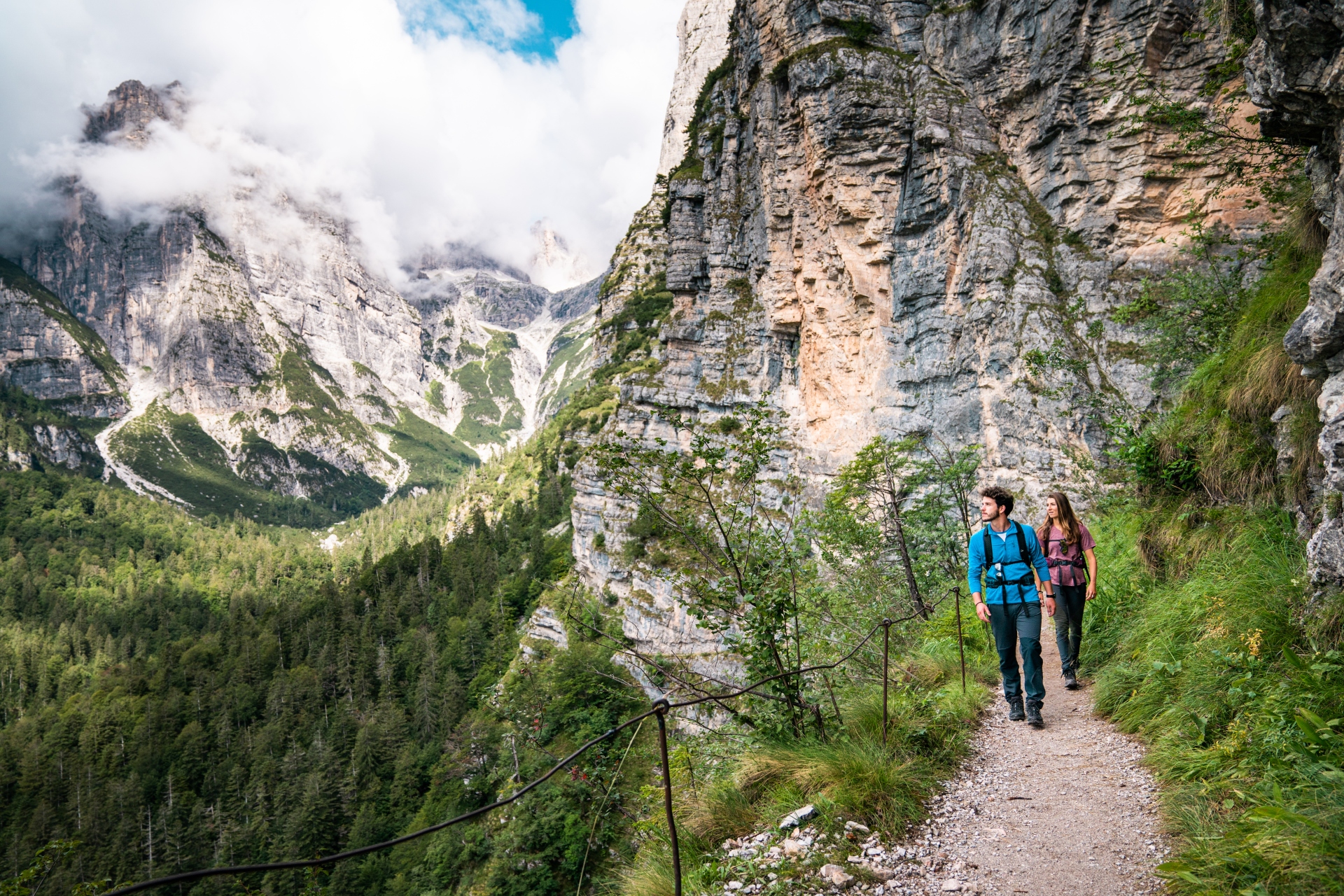
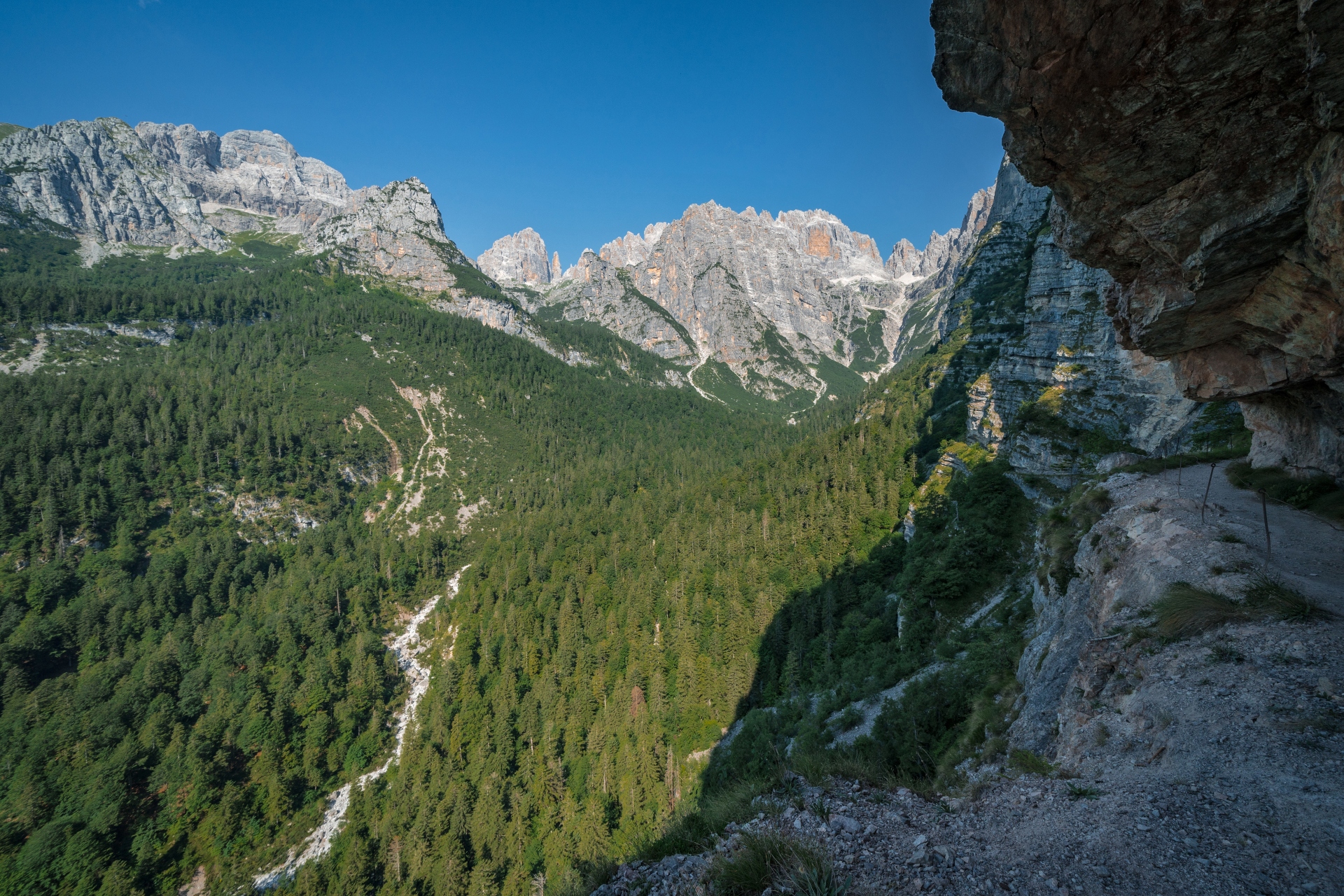
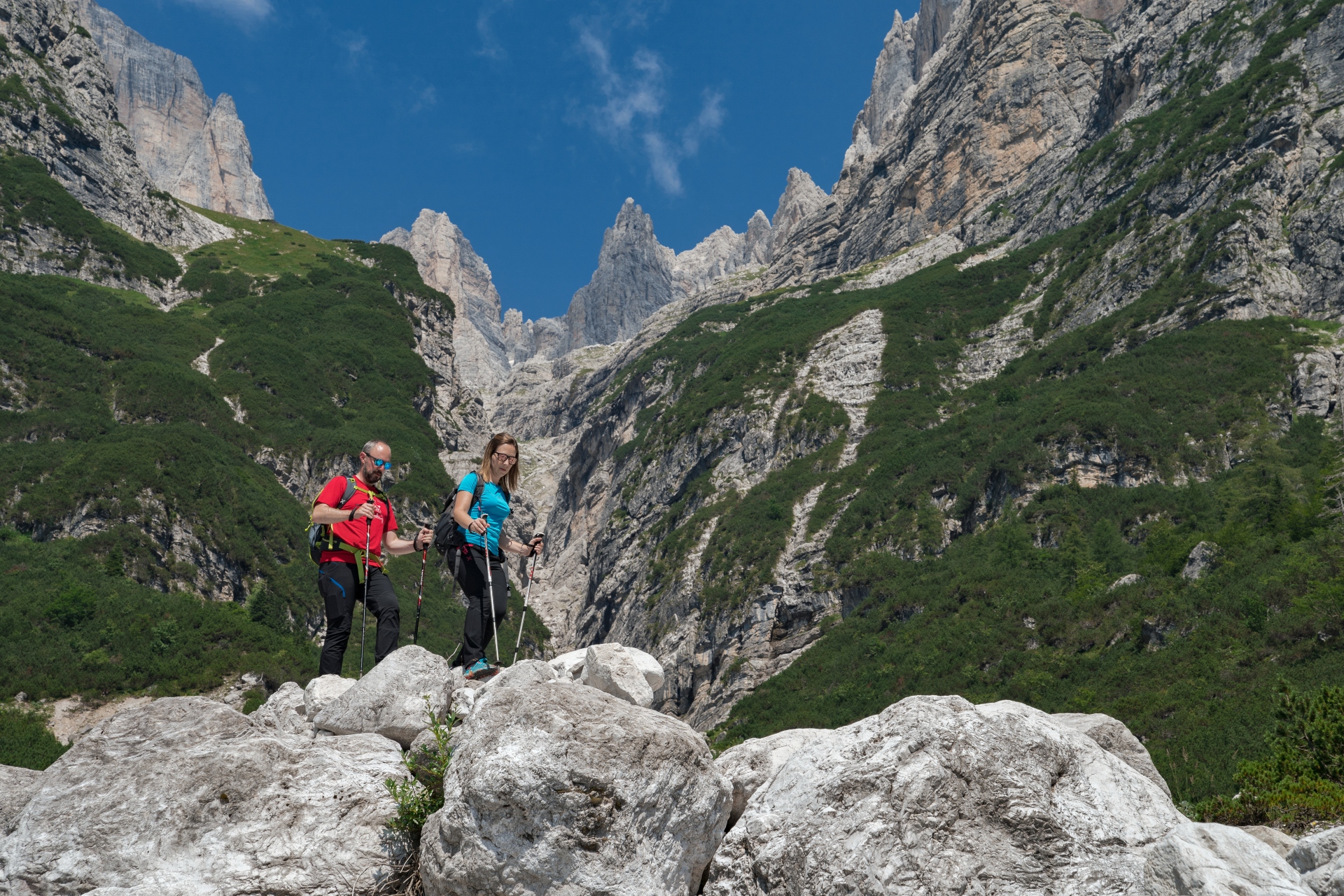
There are mountains you can only look at, and others that get under your skin.
The Brenta Dolomites, a UNESCO World Heritage Site since 2009, belong to the latter. They are the wildest heart of Trentino, where the rock tells stories of mountaineering and the light seems to have a soul.
These mountains were born 250 million years ago, when in place of the peaks there was a tropical atoll in a warm sea. Then, the clash between continental plates brought that seabed of petrified corals to the surface. Thus dolomite was born, the pale rock that takes its name from the French geologist Déodat de Dolomieu.
Because of the color of their stone, these mountains have long been known as the Pale Mountains. A legend tells that an earthly prince, in love with the moon princess, could live with her only after the forest gnomes stretched a veil of moonlight over the mountains. Since then, the Dolomites have shone with a light that seems to come from the sky.
Here, at sunset, something magical happens: the white walls ignite in pink, orange, and gold. It is the enrosadira, when the Dolomites seem to catch fire with light. The sun’s rays, refracting on the dolomite, color the peaks, offering a brief but unforgettable spectacle.
Among these vertical walls, the history of Trentino mountaineering was born. In 1864 the Englishman John Ball was the first to climb Cima Tosa, the highest peak of the group, opening the way for generations of mountaineers. Today, anyone who walks the trails of the Brenta Dolomites follows in the footsteps of those pioneers and breathes the same freedom.

Cima Tosa, Cima Brenta, and Cima d’Ambiéz are much more than mountains: they are living presences, telling the silence and grandeur of nature, and teaching you to stop, to listen.
The Brenta Dolomites are not just crossed: they are lived. They ask you to stop, look at them, and let them enter your heart.